When Exams Feel Overwhelming - Understanding and Supporting
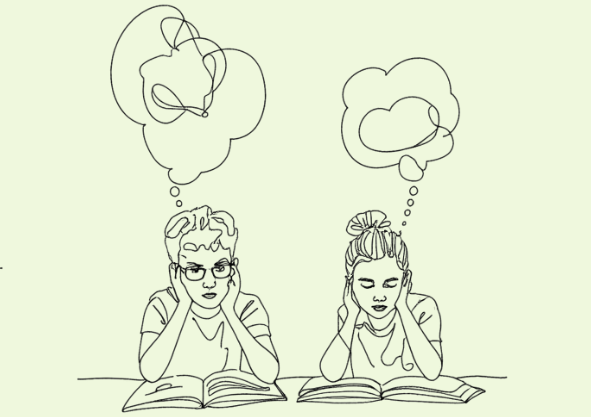
It seems like yesterday when I shut myself away in my bedroom to revise for GCSEs, A Levels and my degree. Naturally… I suddenly found far more important things to do. Rearranging furniture, having a much needed declutter and organising drawers I hadn’t opened in years.
Looking back now, I can see that procrastination wasn’t laziness at all. Procrastination is often a manifestation of anxiety, a safety-seeking behaviour that gives us distraction and comfort from facing the thing we fear most; revision, failure, disappointment or the possibility of a doomed future.
During GCSEs and A Levels, teenagers can feel as though the weight of their entire future is resting on their shoulders.
And whether you’re reading this as a parent or a student, it’s important to recognise just how difficult this stage of life can feel.
As adults, it’s easy to look back and think - “Why did I worry so much? Everything worked out in the end.”
But when you’re 16 to 18 years old, those feelings are very real. Hearing “exams don’t matter” isn’t helpful because to a teenager, they can feel like everything. (Although I can say with certainty, I still haven’t used Pythagoras’ theorem since I was 16).
The teenage brain is undergoing monumental development until around the age of 25, particularly the frontal cortex. This is responsible for emotional regulation, planning and rational thinking. All of which are needed in abundance for exams…it’s no surprise then, why emotions can feel so intense, overwhelming or explosive during this time.
This is one of the reasons I love supporting young people through Cognitive Behavioural Hypnotherapy (CBH). Over six sessions, students learn practical coping techniques, use hypnosis to reframe negative thinking patterns and begin to imagine themselves approaching exams with greater calm and confidence. CBH can help reduce anxiety, improve focus and build resilience, giving students tools they can continue to use long after exams are over. Today, one of my clients shared how calmly and confidently she went into her A Level exam last week and how she was able to reframe her previously unhelpful thoughts into something more empowering - “this exam should be scared of me!” This progress is huge, not only did her mind believe it, but her nervous system did too.
Exam anxiety escalating into panic attacks can become a thing of the past. Here are a few gentle pointers to help with procrastination, panic and exam anxiety.
Remember - Anxiety Comes in Waves
Anxiety feels huge, but the physiological stress response itself is short-lived. The initial chemical reaction in the body only lasts around 90 seconds… just enough time to help us escape the proverbial sabre-toothed tiger back in the day.
What often keeps anxiety going afterwards are our thoughts and behaviours. In many ways, we unintentionally feed it, allowing it to grow and strengthen over time.
When you notice the signs - racing heart, feeling sick, shaky hands - try observing the feeling rather than escalating it.
One of my favourite calming techniques is a tension-release breath, have a go using the following steps:
Take a deep breath in through your nose
Hold it for as long as feels comfortable
Slowly release the breath through your mouth, try to make the out-breath as long and slow as possible. Some people like to count how many seconds they can make the out-breath.
As you breathe out, relax your jaw, shoulders and hands. Let the tension melt away…physical tension is hugely linked to negative thoughts (I’ll save that for another blog).
Repeat this a few times and before you know it, the anxiety sensations will have reduced. No one will even notice if you do this while waiting outside the exam hall or sitting at your desk before the paper starts.
Watch Out for Catastrophising
Exam stress often brings catastrophic thinking - “I’ll never get a job,” “I’ve ruined my future,” “everyone else is coping better than me.”
Notice the pattern? Jumping straight to worst-case scenarios.
This is where mindfulness can help. Rather than fighting thoughts, try noticing them, question how helpful they are and let them pass by. Remember - thoughts are not facts.
One exercise I often recommend is Leaves on a Stream - imagining your thoughts floating away on like leaves drifting down a stream rather than getting tangled up in them.
Another helpful tip when you notice catastrophising thoughts is the 3 Rs:
Recognise – “I’m going to fail my exams; my future is over!” Notice that this thought isn’t particularly helpful.
Rationalise – Take a step back and gain perspective. This thought isn’t necessarily true or balanced.
Reframe – “I’m going to try my best, and my future is not determined by exams.”
This takes practice and there is real power in writing these thoughts down rather than just holding them in your mind. Seeing them on paper can help create distance, making it easier to challenge and reframe them more clearly.
Notice Unhelpful Behaviours
Anxiety shows up in behaviour too. For some people, it looks like avoiding revision altogether through procrastination. For others, it becomes obsessive over-revising with no breaks, no rest and constant pressure to keep going.
Interestingly, both can be forms of safety-seeking behaviour.
Avoidance can protect us from fear of failure - “Well, I didn’t do badly because I’m not capable… I just didn’t really try.”
Overworking can create another rule - “I only did okay because I revised non-stop.”
Neither extreme is particularly healthy. Make a revision schedule that works for you, matching your level of focus and interest, but make sure you set aside time for:
Rest
Breaks
Friends
Family
Hobbies
Sleep
Fun
Although focused revision absolutely helps, your entire life should not revolve around exams. Learning how to balance effort with self-care is a skill that will serve you far beyond your years in education.
Don’t Discuss Answers After the Exam
For goodness’ sake…don’t stand outside the exam hall dissecting every answer with your friends afterwards.
What’s done is done.
Why open a can of worms when absolutely nothing can be changed now? One question turns into another, panic spreads and suddenly everyone is convinced they’ve failed.
Instead, make it a rule with your friends - no answer comparisons after the exam.
Be proud of yourself for going in there and giving it your best shot. Then move on.
A Final Thought…
Exams can feel enormous when you’re in the middle of them. While they are important, they are not a measure of your worth, intelligence or future happiness.
You do not have to manage anxiety alone - your loved ones are rooting for you and so am I!


Comments